Resources Library: Law Enforcement
Start a Search:
Data Detox x Youth
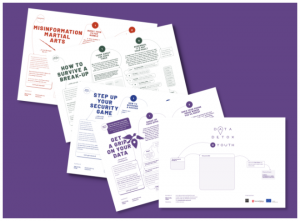
Data Detox x Youth is an activity book to help young people take control of their tech. This interactive toolkit encourages young people to think about different aspects of their digital lives, from their social media profiles to their passwords, with simple activities for reflection and play.
The activity book contains four sections:
- Digital Privacy, which focuses on reducing data traces and understanding online profiling;
- Digital Security, with tips on creating strong and secure passwords;
- Digital Wellbeing, which deals with the addictive nature of smartphones;
- and finally Misinformation, a guide for consuming and sharing information online.
The toolkit is designed for 11 to 16-year-olds who already have their own devices, but it can be used by people of all ages. All you need is a smartphone or a tablet, a printer and something to write with.
Places where the Data Detox x Youth could be used:
- In a classroom (or virtual classroom)
- At home
- By youth groups and organisations (e.g. in a workshop)
Also available in العربية (Arabic), Basque, Brazilian Português, Čeština (Czech), Deutsch, Español, Ελληνικά (Greek), Italiano, Nederlands, Norsk, Português and Shan.
Dismantling Racism Resources
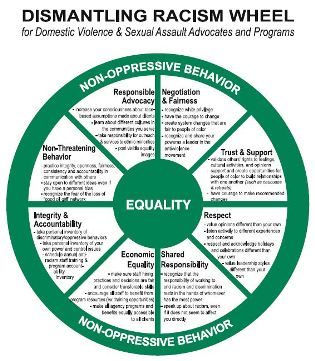
Two wheels created by the Women of Color Caucus and Social Justice Task Force of the Virginia Sexual and Domestic Violence Action Alliance. These wheels were created in the tradition of the Power and Control Wheel created by the Domestic Abuse Intervention Programs of Duluth, Minnesota. The Perpetuating Racism Wheel demonstrates how agencies might use power and control to perpetuate racism. The Dismangling Racism Wheel demonstrates how agencies can use principles of equaliaty to dismantle racism within their agencies.
Domestic Violence Homicide Response Plan: A Toolkit for Domestic Violence Programs
Every survivor that domestic violence programs work with is a potential homicide victim. Advocates know this as they work with survivors, advocating on their behalf and building relationships with them and often their families. Domestic violence programs deal with the reality of knowing that a homicide could happen at any time, yet not allowing this knowledge to overpower their work with victims. When this most tragic violation occurs the traumatic impact is profound. This is felt by everyone - no matter the nature of their relationship with the victim. The needs of those closest to the victim, including their children, family and friends are of utmost importance. In addition, domestic violence programs, their clients and staff, and the communities they work within are deeply impacted. A homicide can change organizations and communities forever.
During this time, programs are asked to fulfill a variety of roles and often at the same time are dealing with their own sense of loss. An important part of responding and coping with these events is to realize there is no single “right” answer. Each of these tragedies is as unique as the human being whose life was taken, and all aspects of this person’s life and death need to be acknowledged, respected, and addressed as your program and community decide how to respond. It is also critical for the domestic violence program to utilize the tools and skills of trauma-informed care in their interactions with colleagues and others impacted by the death.
Produced by End Domestic Violence Wisconsin, the objective of this document is to provide a framework for domestic violence programs to develop a plan for how they will respond to a homicide in their community, whether the victim had been a client or not. Additionally, many of the elements of this plan can be adapted for use when programs experience a death of a client in shelter, as often the effects felt are similar.
Effects of Racism on Domestic Violence Resources

This article examines how racism affects African-American women in terms of domestic violence. Racism alters how African American women receive treatment through domestic violence resources and how they perceive resources. Because of racism, African American women have specific concerns when making decisions about domestic violence relationships and what resources would be best for them.
Elder Abuse and Domestic Violence in Later Life: Innovative New Resources for the Community
This archived webinar and power point presentation address the issues of elder abuse and domestic violence in later life. Additionally, they provide the faith-based community, service providers in aging and violence prevention and other interested individuals with a key new resource to help them respond appropriately and assist people in abusive situations to get the help they need. Lisa Furr with the Virginia Center on Aging and Adrienne Johnson with SeniorNavigator presented with Dr. E. Ayn Welleford (Virginia Commission on Alzheimer’s Disease and Related Disorders/Virginia Commonwealth University) moderating.