Resources Library: Multidisciplinary
Start a Search:
Reachable: Data collection methods for sexual orientation and gender identity
In the past few years, researchers have begun developing new methods to measure sexual orientation and gender identity. Sexual and gender minorities have often been classified as "hard-to-reach" populations. However, recent developments in data collection methods demonstrate the increasing number of research methodologies available to those seeking a greater understanding of the lived realities of sexual and gender monorities. This report highlights some examples of data collection methods and presents examples of their use around the world.
The audience for this paper is non-researchers who seek a basic understanding of data collection methods regarding sexual orientation and gender identity. This paper is not a review of data collection. Rather it provides a small number of examples of data collection efforts.
Red Flag Campaign Relaunch Webinar

The Red Flag Campaign is an awareness campaign that educates college students about sexual assault, dating violence, and stalking by highlighting the warning signs, or “red flags,” that students may see in a friend’s relationship.
Through using a bystander intervention strategy, the campaign encourages friends and other campus community members to “say something” when they see red flags for dating violence such as emotional abuse, jealousy, isolation, victim blaming, coercion, stalking, microaggressions, and sexual assault.
Launched in Virginia in 2007, the Red Flag Campaign has since spread across the country to over 400 college campuses, military bases and academies, and community-based advocacy agencies in 48 states and Canada. It was created in partnership with college students, college personnel, and community victim advocates, and funded by grants from the Verizon Foundation, Verizon Wireless, Macy’s Foundation, and the Centers for Disease Control & Prevention.
The campaign includes a digital guide for implementation, miniature red flags for raising awareness in highly visible campus locations, and printed posters featuring active bystander responses to red flag statements. In 2022, Action Alliance staff began a process to create two new series of posters and revise the digital Campus Planning Guide to reflect current student experiences. This webinar shares the history of the campaign as well as the revision process and all of the new materials the campaign has to offer.
Click here to access the recorded session on these updates.
Reproductive Health and Intimate Partner Violence Wheel
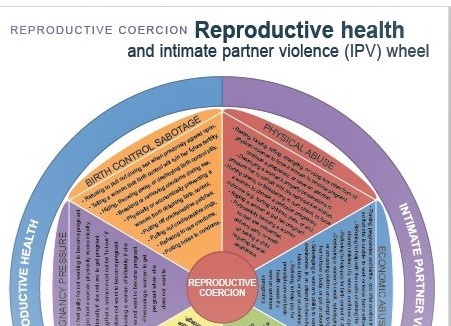
Reproductive Health and Intimate Partner Violence Wheel provides definitions and examples of reproductive coercion and intimate partner violence. The wheel can be used as a training tool for advocates and service providers, as well as a supportive and enlightening resource for survivors.
Research Across the Walls: A Guide to Participatory Research Projects & Partnerships to Free Criminalized Survivors
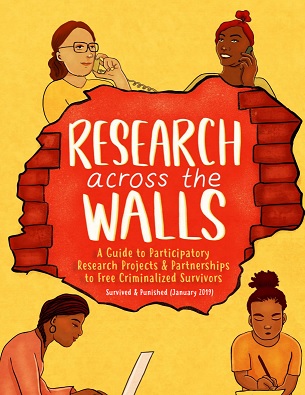
For many survivors, experiences of policing, criminalization, and incarceration are deeply intertwined with gender-based violence. Yet very little research exists about criminalization of survivors. With this research guide, we aim to equip more people with tools, resources, ideas, and models to pursue urgently needed community-based research projects. We hope this guide inspires more organizers, advocates, attorneys, scholars, and survivors — especially those who are currently and formerly incarcerated — to lead research projects that will contribute to a growing body of data and information to fight for the freedom and well-being of criminalized survivors, and of all people.
Resource Guide: Combating Violence Against Women
This Resource Guide was developed by the Department of Homeland Security Council on Combating Violence Against women and includes summaries and links to programs, initiatives, training, and services that can be leveraged by communities across the country to combat these types of crimes. For foreign victims, immigration relief stabilizes a victim’s status in the U.S., which enables the victim to feel a level of security and report the crime. This Resource Guide provides an overview of immigration relief and support for victims.