Resources Library: Prosecutors/Attorneys
Start a Search:
Journal: Revolution: Working with Immigrant Survivors of Sexual and Domestic Violence
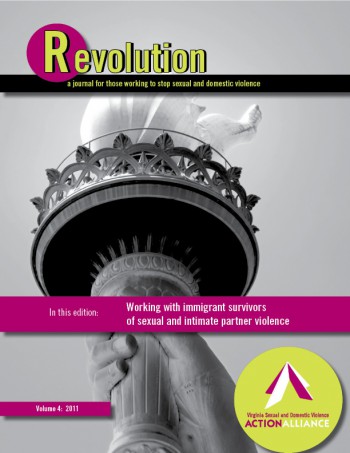
A journal for professionals working with victims/survivors of sexual and domestic violence. Volume 4 addresses working with immigrant survivors, and includes the following topics: Improving Your Program's Accessibility to Immigrant Survivors; Legal Clinics Help Immigrants Understand Their Rights; Immigrant Programs and Services; Power and Control Tactics Used Against Immigrant Women; Cultural Proficiency Continuum.
Volume 4; January 2011.
Published by Virginia Sexual & Domestic VIolence Action Alliance.
24 pages.
Legal Advocacy Manual 2013
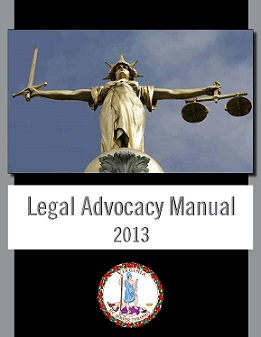
The Legal Advocacy Manual provides victim advocates (as well as victims) with a comprehensive guide to help domestic and sexual violence victims in Virginia through some of the legal processes in which they may become involved. It provides both basic and intermediate levels of information about legal advocacy--what it is, the difference between civil and criminal justice systems, definitions of commonly used legal terms, and how to avoid the unauthorized practice of law, among other topics. The manual offers context for the emotional, logistical, and legal hurdles involved in protective orders, criminal prosecutions, visa applications, and divorces. It is 76 pages long and is in PDF form. Susheela Varky of Virginia Poverty Law Center updated it in June 2013 for recent changes in the law. Ms. Varky has used the manual as a resource for in-person trainings geared to victim advocates, and is available to tailor such trainings for your local Virginia domestic or sexual violence program.
Levels of Violence in the United States
This document was provided at the workshop titled "Beyond Trauma: A Presentation of Dr. Stephanie Covington’s Trauma Theory and Beyond Trauma Women’s Groups" at the Virginia Department of Social Services Office of Family Violence Promising Practices conference on September 16, 2013.
Liberatory Practices for Accountability Across the Social Ecological Model
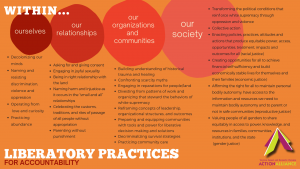
What does accountability look like without punishment, isolation, and shaming?
What are the shifts we can make in ourselves, our relationships, communities, and as a society to move from punishment to true accountability, which builds connection and encourages growth?
This infographic, created for the Action Alliance webinar series, “Reimagining Our Legacy: Transforming from Criminalization to Liberation”, seeks to offer a few ways in which we can practice methods of accountability that liberate us from punishment and harm and move us toward healing and connection.
National Women’s Law Center - Mythbusting Title IX and Sexual Assault
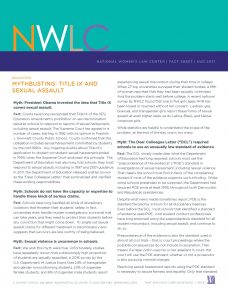
Nearly one in five undergraduate women experience sexual assault or attempted sexual assault while in college, as do too many men and gender non-conforming students. Title IX of the 1972 Education Amendments requires that schools prevent and respond to reports of sexual harassment, including rape, to ensure survivors can continue to learn in the wake of violence. Despite significant evidence to the contrary, some critics argue that survivors of sexual misconduct on college campuses have too many rights. Myths like these are inconsistent with the law and ignore the real experiences of students subjected to sexual harassment. Below are other myths and facts about sexual assault and Title IX.